
Direct answer
The decision in brief
A solid-top acoustic uses a single piece or joined pieces of solid wood for the soundboard, while a laminate top uses layered material. Solid tops are commonly selected for responsiveness and development with use; laminate tops are commonly selected for affordability and greater tolerance of routine environmental variation. Construction quality, bracing, body shape, setup and the individual instrument still matter, so retailers should confirm exactly which parts are solid and compare complete guitars in the same conditions.
Define solid top, laminate and all-solid accurately
The top, or soundboard, is the large vibrating face of an acoustic guitar. Yamaha's acoustic selection guide describes it as central to the instrument's sound-producing system. A solid top means the soundboard is made from solid wood, normally bookmatched from two pieces. A laminate top uses bonded layers. An all-solid guitar uses solid wood for the top, back and sides.
These terms are not interchangeable. “Solid wood guitar” may be misunderstood when only the top is solid. “Spruce top” names a species or appearance but does not prove solid construction. Product data should have separate fields for top material and top construction, followed by back and side material and construction.
Verify the claim
Use the current manufacturer specification, purchase document and approved sample. Do not identify construction from a front photograph or wood grain alone. Edge views at the soundhole may provide clues, but finish, binding and manufacturing methods can make visual interpretation unreliable. When construction affects the retail description, request written confirmation.
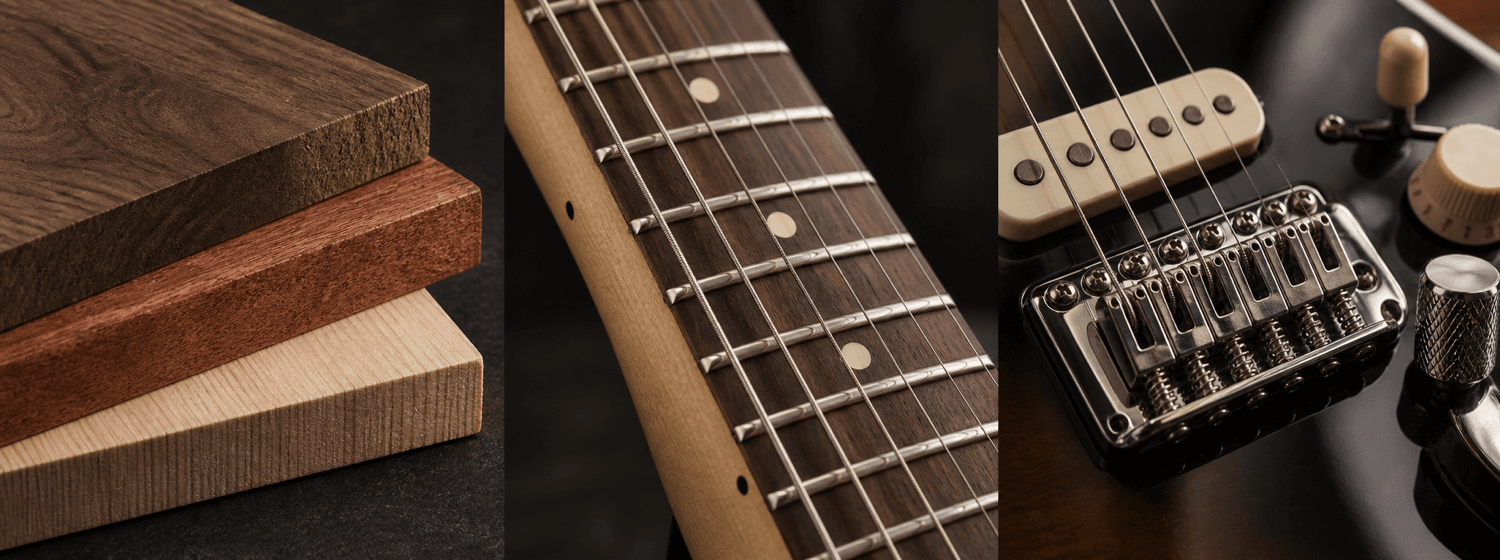
Understand response, value and practical trade-offs
| Factor | Solid top | Laminate top |
|---|---|---|
| Construction | Solid soundboard wood | Bonded layered soundboard material |
| Common range role | Step-up or performance-led acoustic | Access, education, travel or robust-use acoustic |
| Response expectation | Often selected for dynamic and tonal potential | Often selected for consistency and accessible cost |
| Environment | Requires attentive humidity care | Generally more tolerant, but not immune |
| Buyer verification | Species, grade, bracing and condition | Layered construction, finish and condition |
A well-made solid top can respond with nuance and may change as the wood ages and is played. That does not mean every solid-top guitar outperforms every laminate instrument. Thickness, bracing, body geometry, bridge mass, neck system, strings and setup all contribute to what the player hears and feels.
Laminate construction can provide stable, repeatable and affordable products for classrooms, rental programs, travel or climates where care is difficult. It is still wood-based material and the complete guitar can move with humidity and temperature. “Weatherproof” or “maintenance-free” would be inaccurate unless the specific product has evidence for that claim.
Compare the complete instrument, not one material field
Set two guitars in the same room, with comparable string age and setup, before comparing. Play identical passages at soft, medium and stronger dynamics. Listen for balance across strings, note separation, projection, sustain and how the guitar responds to changes in attack. Then assess neck feel, body comfort and tuning stability.
Body shape can dominate the use case. Taylor's body-shape overview, for example, explains different balances of volume, low-end response, articulation and comfort across its shapes. A compact solid-top guitar and a large laminate dreadnought solve different problems; top construction alone cannot decide between them.
Record observations in conditional language. “Sample A produced clearer note separation in this room with these strings” is traceable. “Solid tops sound professional” is neither precise nor fair to the range. When publishing a comparison, identify what was tested and avoid extending the conclusion beyond those instruments and conditions.
Plan for climate, shipment and retail preparation
Solid wood responds to relative humidity. Dry conditions can contribute to fret protrusion, lowered action, cracking or top movement; excessive humidity can raise action and cause swelling. Laminate reduces some dimensional movement in the panel but does not remove risk from the neck, braces, joints, finish and hardware.
For a shipment inspection, photograph carton condition, identify the unit and allow an instrument exposed to temperature extremes to acclimatize before opening or tuning aggressively. Inspect the top and back for deformation or cracks, check bridge adhesion, neck angle symptoms, relief, action, fret condition and internal braces. Record room conditions when interpreting movement.
Retail installation preparation should include a reasonable humidity policy, trained staff and a final setup check. Do not promise that an instrument will remain unchanged after transport. Provide customers with care guidance that matches the current manufacturer instructions and local climate rather than a universal number copied from another brand.
Give each construction a clear retail role
A laminate-top acoustic can provide an accessible, durable-feeling first choice, but its role should be stated through the complete product: comfortable setup, dependable hardware, clear documentation and appropriate case or accessories. A solid-top step-up should offer a difference the customer can experience, not only a badge on the specification card.
Compare adjacent models for body shape, top construction, electronics, neck feel, finish, hardware and delivered setup. If the solid-top step-up is difficult to play or poorly prepared, the construction claim will not create a credible upgrade. If the laminate model is carefully built and suits a classroom or travel application, it can be the more responsible recommendation.
Use a three-part staff explanation: what the construction is, what it commonly changes, and why the customer should try the exact guitar. This supports trust and prevents an absolute hierarchy. Range depth should follow actual acoustic demand, price sensitivity, climate, lesson programs and the store's capacity to inspect and maintain instruments.
A worked acoustic range decision
Imagine a store comparing two similar dreadnoughts. Model A has a laminate spruce top, simple passive electronics and a lower price. Model B has a solid spruce top, no electronics and a higher price. The specification sheet makes Model B appear to be the automatic step-up, but the customer jobs differ. Model A may serve a lesson student who needs amplification; Model B may serve a player prioritizing unamplified response.
The buyer first confirms construction in writing, then normalizes scale, nut width, body dimensions, strings and setup. Both samples acclimatize in the same room. The review records relief, action, fret and nut function before adjustment, followed by identical playing passages. Model B shows a more responsive change under light and strong attack in that comparison; Model A provides the required output and a stable, approachable application. These are sample observations, not universal claims.
The store can stock both if the roles are clear and demand supports them. If another laminate electro-acoustic already serves Model A's role, the new model may create overlap. If the solid-top guitar requires more humidity care than the store can provide, preparation and customer guidance must be improved before launch.
The written decision names the use, evidence and risk for each model. This gives staff an honest explanation and gives the next shipment inspection a reference. It also prevents “solid equals good, laminate equals bad” from replacing an actual product comparison.
Ask construction and care questions before ordering
Request separate fields for top, back and sides, including material and whether each is solid or laminate. Ask for body dimensions, scale, nut width, bracing description, finish, bridge and fingerboard materials, installed electronics, string specification and setup method. Tie every response to the exact model revision.
Ask how the bridge joint, braces and neck function are checked, what environment the instrument is conditioned in, and what packaging protects the guitar during expected transport. If humidity guidance is supplied, retain the current document and use it for staff training. Do not replace manufacturer guidance with an unsupported universal range.
Where sustainability or species claims matter, request the relevant evidence rather than inferring it from trade names. Public content should use the supplier's verified terminology and comply with the destination market. If documentation is incomplete, keep the public description narrow until it is resolved.
Build trustworthy product content and aftercare
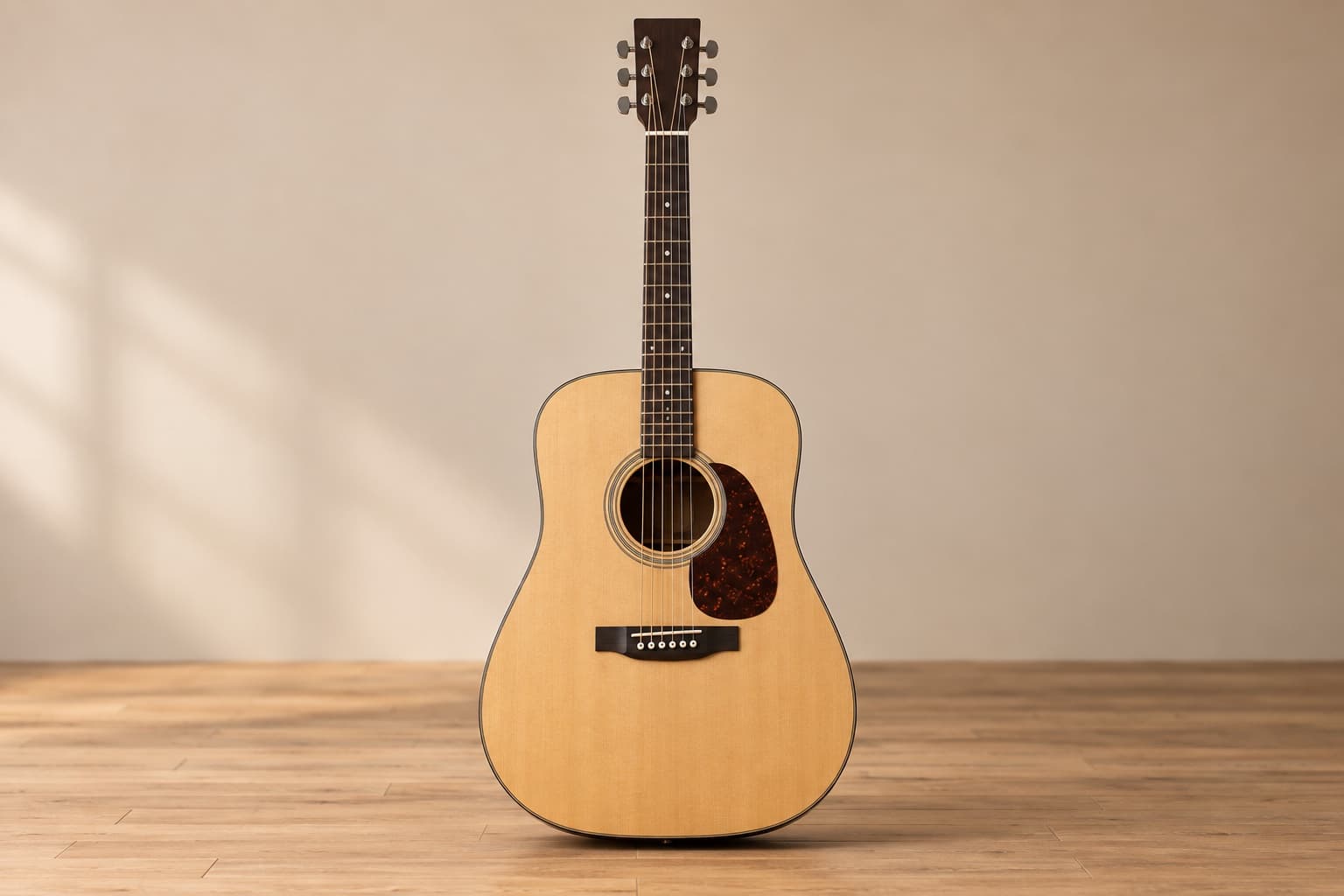
Photograph the complete body and soundboard accurately. Use detail images for the bridge, soundhole and edge construction only when they belong to the actual model. Captions can explain what is visible; they should not identify an unseen internal material or guarantee a tonal result.
On a product card, write “solid spruce top” only when both species and construction are verified. If back and sides are laminate, say so in the detailed specification. Link to a comparison that explains why complete construction and setup matter. This is clearer for customers and easier for search systems to interpret than a chain of unexplained adjectives.
Give the customer a final setup check and care guidance appropriate to the instrument and climate. Record common questions, returns and damage patterns without personal data. If one construction shows higher service burden in a specific route or season, investigate packaging, storage and preparation before turning the observation into a broad public statement.
Explain construction in language customers can verify
Start with the fact: “This guitar has a solid spruce soundboard,” or “This model uses a laminate top.” Then describe the practical reason the model is in the range. The solid-top model may be the option to compare for responsive unamplified playing; the laminate model may be the accessible choice for lessons, shared use or more routine transport. Finish by inviting the customer to play both.
Avoid using laminate as a synonym for poor quality or solid as a guarantee of professional sound. Those shortcuts ignore bracing, dimensions, manufacturing, strings and setup. They can also undermine a well-suited entry instrument. A customer should understand a construction difference without being pushed toward the higher-priced label.
Show care requirements at the point of sale. Explain that all wooden instruments can be affected by environmental conditions, while solid components generally require more attention to humidity change. Use the current maker's instructions and local knowledge. Do not offer one global humidity number when the manufacturer has provided a specific range or procedure.
When electronics are part of the decision, demonstrate the acoustic and amplified result separately. A laminate electro-acoustic may be more useful to one customer than a solid-top instrument without the required system. Confirm controls, battery access, feedback behavior in the test context and compatibility with the intended amplifier or DI.
Use a comparison card with verified construction, body shape, scale, nut width, electronics and included protection. Keep subjective observations under a clearly named test condition. If the customer asks where the wood comes from or how it is certified, consult verified documentation rather than improvising. Clear limits increase credibility and give the buyer a better reason to trust the information that is supplied.
Solid top vs laminate buyer checklist
- Record top material and construction in separate fields.
- Confirm whether back and sides are solid or laminate.
- Keep the specification version and supplier confirmation.
- Compare body shape, bracing description, scale and setup.
- Use comparable strings and room conditions for playing tests.
- Inspect top movement, bridge adhesion and braces after shipment.
- Record humidity and temperature when they affect findings.
- Define the customer and range role before assigning quantities.
- Explain common tendencies without guaranteeing a sound.
- Review service burden and damage records after launch.
The best choice is the construction that supports the customer's application and the store's range promise at a credible delivered quality. Accurate terminology, a controlled sample review and shipment records are more useful than treating one material label as a quality grade.
Conclusion: compare construction without turning it into a quality rank
Solid top and laminate describe how the soundboard is made. They help frame response potential, cost, care and application, but they do not judge the whole guitar. Body shape, bracing, dimensions, neck, bridge, strings, setup and delivered condition still determine the experience of a specific instrument.
Retail buyers should verify which parts are solid, compare complete samples in controlled conditions and plan for climate, shipment inspection and customer care. Give laminate and solid-top models distinct, honest range roles. A credible step-up must offer a difference the customer can hear, feel or use, while an access product should be evaluated for the job it is meant to perform.
Clear terminology and conditional observations protect trust. Explain the construction, describe common practical implications and invite comparison of the actual guitars. That approach is more useful than presenting one material label as an automatic guarantee.
Frequently asked questions
Questions buyers commonly ask
Is a solid-top guitar always better than a laminate guitar?
No. Solid tops are often chosen for response potential, while laminate tops can suit access, education, travel and more variable environments. Build quality, body shape, bracing, setup and customer use determine the better choice.
How can a retailer confirm a solid top?
Use current manufacturer or supplier documentation tied to the exact model and sample. Do not rely only on a front photograph or visible grain pattern.
Does laminate mean the guitar is waterproof?
No. Laminate panels may tolerate routine environmental variation better, but the neck, joints, braces, finish and hardware can still be affected by heat, cold and humidity.
What should staff tell a customer about solid tops?
Explain that the soundboard is solid wood, describe the response customers commonly seek, discuss appropriate humidity care, and invite the customer to compare the exact instruments.
What should be checked when acoustic guitars arrive?
After appropriate acclimatization, inspect carton and finish condition, cracks or deformation, bridge adhesion, braces, neck function, relief, action, frets, tuners, electronics where fitted and packaging consistency.
How this guide was prepared
This guide organizes model-selection questions into a repeatable retail decision framework. Manufacturer references support definitions and measurement context. They are not treated as universal acceptance limits. Guitar specifications, setup tolerances and audible results remain model-specific and should be verified against the current supplier specification sheet and a physical sample.