Direct answer
The decision in brief
Retail buyers should compare guitars in five layers: customer role, construction, playability, sound system and delivered condition. Start with the job each model must perform, normalize units and measurement methods, then verify the paper differences on a representative sample. A longer specification sheet is not automatically a more differentiated or more saleable guitar.
Start with the role in the range
A buyer cannot judge whether two guitars overlap until each one has a defined job. Write a one-sentence role before opening the supplier spreadsheet: “entry electric for first-time players,” “versatile mid-range stage guitar,” or “compact acoustic for comfort-led shoppers.” This changes the comparison from a list of features into a decision about coverage.
Use four questions. Who is the intended player? What playing context matters? Which objection should the model solve? What existing model could it replace? If two products answer those questions in the same way, extra finish colors or a different control knob may not create meaningful separation.
Translate specifications into customer consequences
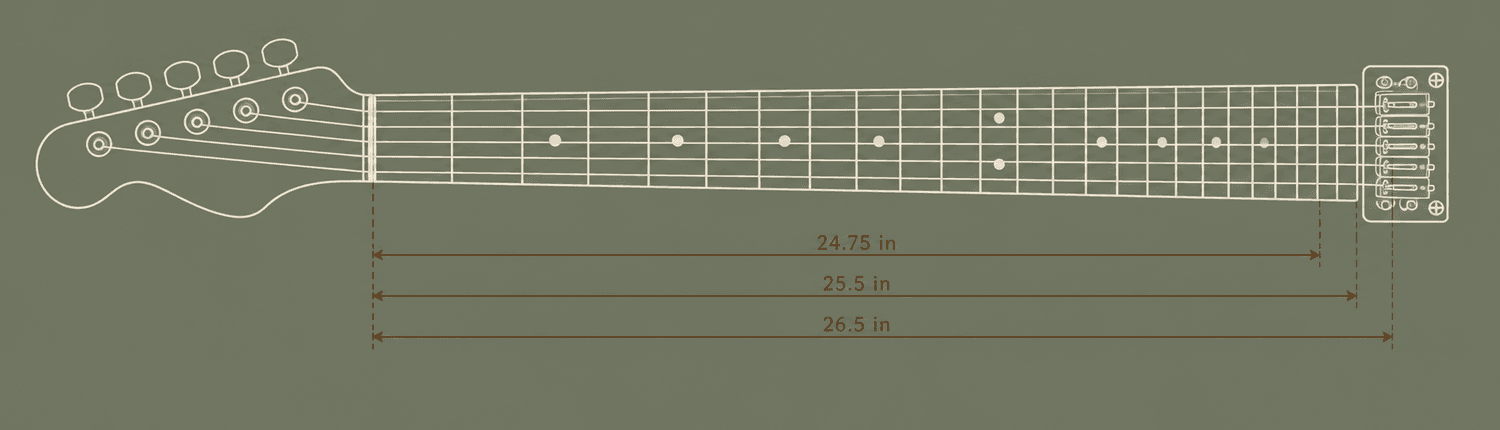
Scale length affects tension and reach, but the effect also depends on string gauge and setup. Pickup layout affects available sounds, but switching design, amplifier and player technique matter too. Body depth changes acoustic projection and physical comfort. The buyer’s task is to connect the specification to a use case without promising a universal result.
- Construction: What does it change in durability, serviceability, weight or acoustic response?
- Playability: What will different hands notice about neck profile, scale, radius, frets and setup?
- Electronics: Which useful sounds and control choices are available?
- Retail clarity: Can staff explain the difference in one accurate sentence?
Normalize the specification data before comparing
Supplier sheets often use different names, units and reference points. “String height” is incomplete unless the sheet states the fret, string, tuning, string gauge and measuring point. “Solid wood” is incomplete unless it identifies the top, back and sides separately. “HSS” is useful shorthand, but it does not disclose pickup output, magnet type, switching or coil-split functions.
Create a controlled comparison sheet with one definition for every field. Store both millimetres and inches only when conversion helps the market, and convert from the original value rather than repeatedly rounding. Keep “not supplied,” “not applicable” and zero as separate states. Missing information is a verification task, not a reason to guess.
| Field | Record | Why it matters |
|---|---|---|
| Scale length | Nut to theoretical saddle point | Tension, reach and intonation context |
| Nut width | Width plus unit | String spacing and first-position feel |
| Fret count | Actual installed frets | Upper register and neck pickup placement |
| Action | String, fret and test condition | Delivered setup, not permanent capability |
| Pickup layout | Bridge-to-neck code and switching | Available sounds and sales explanation |
Manufacturer setup figures are starting references, not universal pass/fail limits. Fender, for example, explicitly frames its published setup specifications as guidance and notes that player application and string gauge can require adjustment.
Use a five-layer comparison
1. Customer fit
Define experience level, musical context, preferred feel and likely budget band. Avoid assuming every beginner wants the lowest specification. Some prioritize comfort, tuning stability or a familiar body shape over added electronics.
2. Construction
Record body style, neck joint, top construction, bracing where relevant, fingerboard material, finish and major hardware. Compare facts before attaching value labels. Bolt-on, set-neck and neck-through designs each involve different production, repair and performance considerations; none is automatically superior in every range position.
3. Playability
Compare neck shape, scale length, nut width, fingerboard radius, fret size and count, instrument weight, balance and access. Then separate design specification from setup condition. Relief, action, nut-slot height and intonation can change after shipment and may be adjustable. A neck profile or scale length is a design choice; excessive fret ends or an unworkable truss rod are sample findings.
4. Sound and controls
For electrics, record pickup arrangement, selector positions, volume and tone functions, active/passive requirements and output consistency. For acoustics, consider body shape, top construction, scale, bracing description and installed pickup system. Avoid reducing sound to one wood name.
5. Delivered condition
Specify packaging, included accessories, labeling, documentation and setup target. Shipment inspection should distinguish transit damage from recurring production issues. Photograph the carton before opening, record the instrument identifier, allow a cold or hot shipment to acclimatize, then inspect in a consistent order.
Build a decision matrix that prevents false precision
A useful matrix has a small number of weighted criteria and a written reason for each weight. It does not hide judgment behind a 92.4-point score. Begin with gates: legal labeling, safe construction, functioning truss rod, stable neck, working electronics and acceptable packaging. A failed gate requires investigation regardless of the total score.
After gates, use a simple 1–5 scale for customer fit, range separation, playability consistency, staff explainability, service burden and commercial viability. Add evidence beside every score: specification sheet, measured sample observation, staff trial note or supplier response. If evidence is missing, mark it pending.
| Criterion | Question | Evidence |
|---|---|---|
| Customer fit | Does it solve a defined player need? | Persona and use case |
| Range separation | Is the difference meaningful beside current models? | Side-by-side matrix |
| Consistency | Can the target setup be repeated? | Sample and shipment inspection |
| Explainability | Can staff state the difference accurately? | One-sentence sales explanation |
| Service burden | What adjustment or support is likely? | Technician review |

Verify the differences on a representative sample
A sample confirms whether the proposed specification becomes a usable instrument. Record the exact sample, date, string set, tuning, room condition and tools. Inspect appearance and assembly first, then neck relief, action, fret condition, nut function, hardware, electronics, acoustic response and packaging. Play every fret at controlled dynamics before making setup changes.
Do not use one sample to claim shipment-wide consistency. Use it to identify measurement definitions, possible failure modes and questions for the supplier. For repeat orders, compare shipment inspection results with the approved reference sample and agreed tolerance document. If a measurement changes after acclimatization or setup, record both the received and adjusted states.
Factory testing documentation can support the review when it identifies the test, sampling plan, equipment and acceptance rule. A generic “QC passed” statement is not equivalent to measured evidence. Likewise, a showroom impression is useful experience but does not replace electrical checks or a controlled comparison.
Work through a realistic three-model comparison
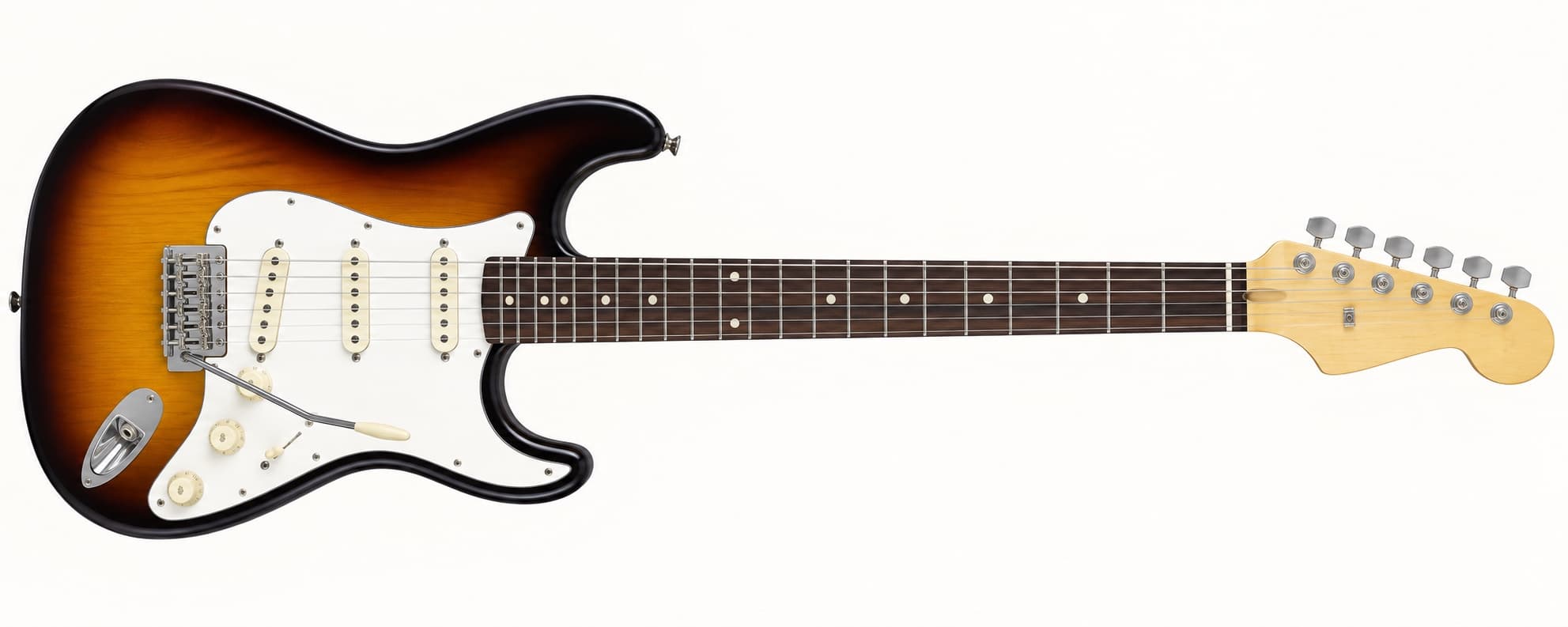
Imagine a buyer reviewing three mid-priced solid-body electrics. Model A uses an SSS layout, a vintage-style bridge and a rounder neck. Model B uses HSS, a two-point vibrato and a slimmer neck. Model C uses two humbuckers and a fixed bridge. A feature count makes Model B look like the obvious winner because it has the broadest list. A range comparison asks a better question: which customer and use does each model serve?
First normalize the data. Confirm scale length, nut width, neck dimensions at named frets, radius, fret count, pickup switching, bridge function, weight range and received setup method. Next place the models into customer roles. Model A may serve a traditional single-coil player; Model B may serve a player moving between clean and higher-gain sounds; Model C may serve a fixed-bridge customer who wants two humbucker positions. If the store already has those roles, the new models must show a credible step-up or replace a weaker option.
Then review samples without changing the setup. Record relief, action at a named fret, intonation, weight, balance, control function and any repeatable playability issue. After the received-condition record is complete, make permitted adjustments and record the result. A model that reaches the target quickly may carry a lower service burden than one with a slightly richer specification but inconsistent fret or nut work.
Finally write a two-line decision. Line one states the range role and evidence. Line two states open risks and the next check. This produces a decision that another buyer can audit. It also gives content editors a precise, non-promotional explanation for a comparison page.
Ask suppliers questions that produce usable evidence
Broad questions invite broad claims. Replace “Is the quality good?” with a request tied to a decision: “Please confirm the neck-profile measurement points and nominal values,” “Which selector positions use both coils of the bridge pickup?” or “What action method is used at final inspection?” Ask for the current revision of drawings or specification sheets when dimensions affect compatibility or published content.
For factory testing, request the function, equipment, sample size, frequency and acceptance rule. An electronics test might confirm that every selector position passes signal, while a separate sample audit measures output consistency. A setup check might confirm adjustability rather than guarantee one exact action after international shipment. Treat those as different controls.
When a response changes, retain the date and version. Update internal data first, then product and editorial content. If a material or dimension remains uncertain, publish less detail rather than filling the gap from a similar model. Trust grows when the site states what is known, how it was verified and where individual samples can vary.
Maintain the comparison after the buying decision
A specification comparison should not disappear into an approval folder. Link it to incoming inspection, product content, staff training and post-launch review. When the first shipment arrives, compare sampled units with the approved reference and log deviations using the same field names. This reveals whether a problem comes from the specification, the sample, production variation, transport or retail preparation.
After launch, add evidence from returns, setup time, customer questions and staff demonstrations. Keep personal customer information out of the analytical record. A recurring question can signal unclear content; repeated adjustments can change the service-cost assumption; a low-selling model may need a better demonstration before it is removed.
Review public claims whenever the specification, supplier or model revision changes. Structured data, tables, captions and FAQs must match the visible article. Archive replaced values rather than silently overwriting the evidence trail. That maintenance turns a one-time comparison into a reliable operating tool and makes the article more useful for both search visitors and answer systems.
Use a reusable comparison brief
Before the final buying meeting, condense the evidence into a one-page brief. Begin with the decision and date: add, replace, test or reject. Name the customer role and existing model affected. List the three differences most likely to change a customer's choice, followed by the evidence source for each one. Put unresolved questions in a separate block so they cannot be mistaken for facts.
The specification block should contain only normalized fields that matter to the decision. Include original supplier terms in notes when translation or naming could create ambiguity. Use links to the approved specification revision, sample record and photographs instead of copying uncontrolled values into several documents. Assign an owner and review date to every pending item.
The experience block records what happened during the sample review: room conditions, string set, amplifier or acoustic setting, player tasks, adjustments and observations. It should not imply that the organization has completed factory or shipment testing unless those records exist. When a factory report is available, cite its date, lot and method separately from the editorial team's sample review.
The commercial block states range separation, expected service burden, reorder assumptions and content needs. Avoid inserting confidential price or customer data into a public article. The public version can explain the method and verified difference; the internal brief holds commercially sensitive calculations.
End with the exact next action. Examples include requesting a switching diagram, reviewing a second sample, defining an action measurement method, testing packaging, or replacing an overlapping model. A clear next action is more valuable than a high score with no owner. After launch, reopen the brief with real inspection and range evidence, then update both the decision and the article if the facts have changed.
Avoid six common buying errors
- Counting features instead of roles. More controls do not guarantee a clearer reason to stock the model.
- Comparing unnormalized data. Mixed units and different measurement points create false differences.
- Treating setup as a fixed specification. Relief and action interact and can change with strings and climate.
- Using tonewood as the whole explanation. Construction, dimensions, hardware, pickups and setup work together.
- Approving from one attractive sample. A sample shows potential; shipment inspection shows consistency.
- Publishing supplier claims without verification. Mark uncertain data internally and confirm it before using it on a product page.
The strongest comparison is short enough to use, detailed enough to audit and connected to a real range decision. Keep the raw supplier sheet, normalized comparison, sample record and final rationale as separate documents so later buyers can understand what changed.
Conclusion: make every specification earn its place
A retail comparison succeeds when it converts product data into a decision another person can understand and repeat. Define the customer role, normalize the fields, compare connected systems, verify the important differences on a named sample and preserve the evidence behind the decision. Do not let a long supplier sheet substitute for range logic.
The method also improves public content. Editors can answer the buyer's question early, show a concise comparison table, explain conditions and trade-offs, cite current sources and link to verified examples. Search engines and AI answer systems receive clear relationships, while readers see where the conclusion applies and where a physical sample is still required.
Keep the comparison alive after launch. Incoming inspection, setup time, staff questions, customer choices and model revisions may change the original decision. Update the internal brief and visible article together. That disciplined loop creates more useful buying decisions than adding unsupported specifications or promotional language.
Frequently asked questions
Questions buyers commonly ask
Which guitar specifications matter most to retail buyers?
Start with specifications that change customer fit: body type, scale length, neck profile, nut width, fretwork, weight and balance, pickup or acoustic construction, bridge, controls and delivered setup. The priority depends on the model’s role and target player.
Should retailers compare guitar action measurements?
Yes, but only with the same string, fret, tuning and measuring method. Action is a setup state influenced by relief, fret condition, nut height and bridge adjustment. It should not be presented as a permanent model capability.
How many guitars are needed for a sample review?
One sample can verify design intent and establish the inspection method. It cannot prove production consistency. Shipment-level confidence requires an agreed sampling plan and records from multiple units or deliveries.
Is a longer specification sheet better?
No. A specification earns space when it helps identify customer fit, range separation, service needs or a verifiable product difference. Unsupported detail can make comparison harder rather than better.
How should missing supplier data be handled?
Mark it as not supplied, ask a specific question and keep the response with the model record. Do not infer a material, dimension or performance claim from photography or a similar model.
How this guide was prepared
This guide organizes model-selection questions into a repeatable retail decision framework. Manufacturer references support definitions and measurement context. They are not treated as universal acceptance limits. Guitar specifications, setup tolerances and audible results remain model-specific and should be verified against the current supplier specification sheet and a physical sample.